
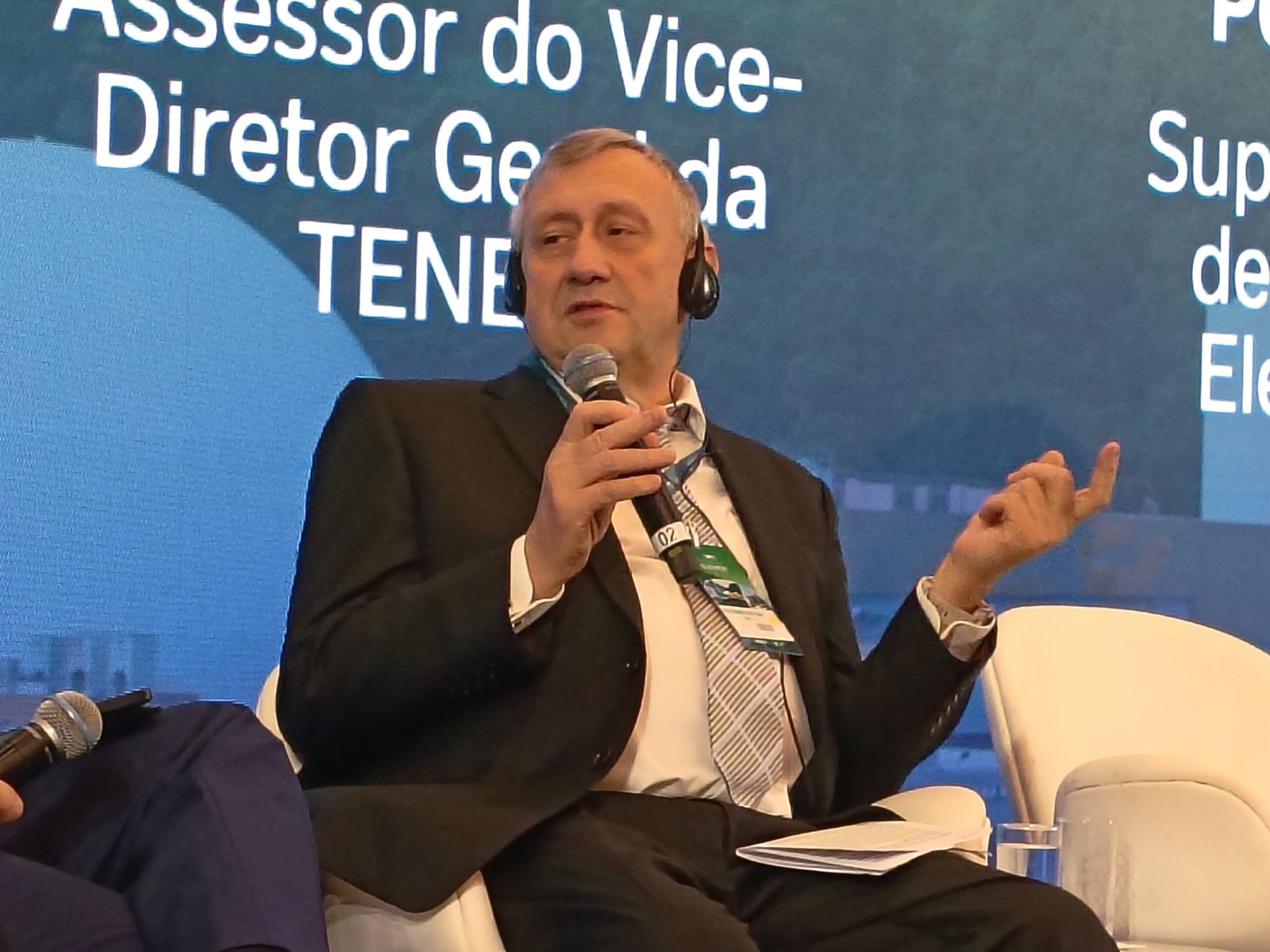
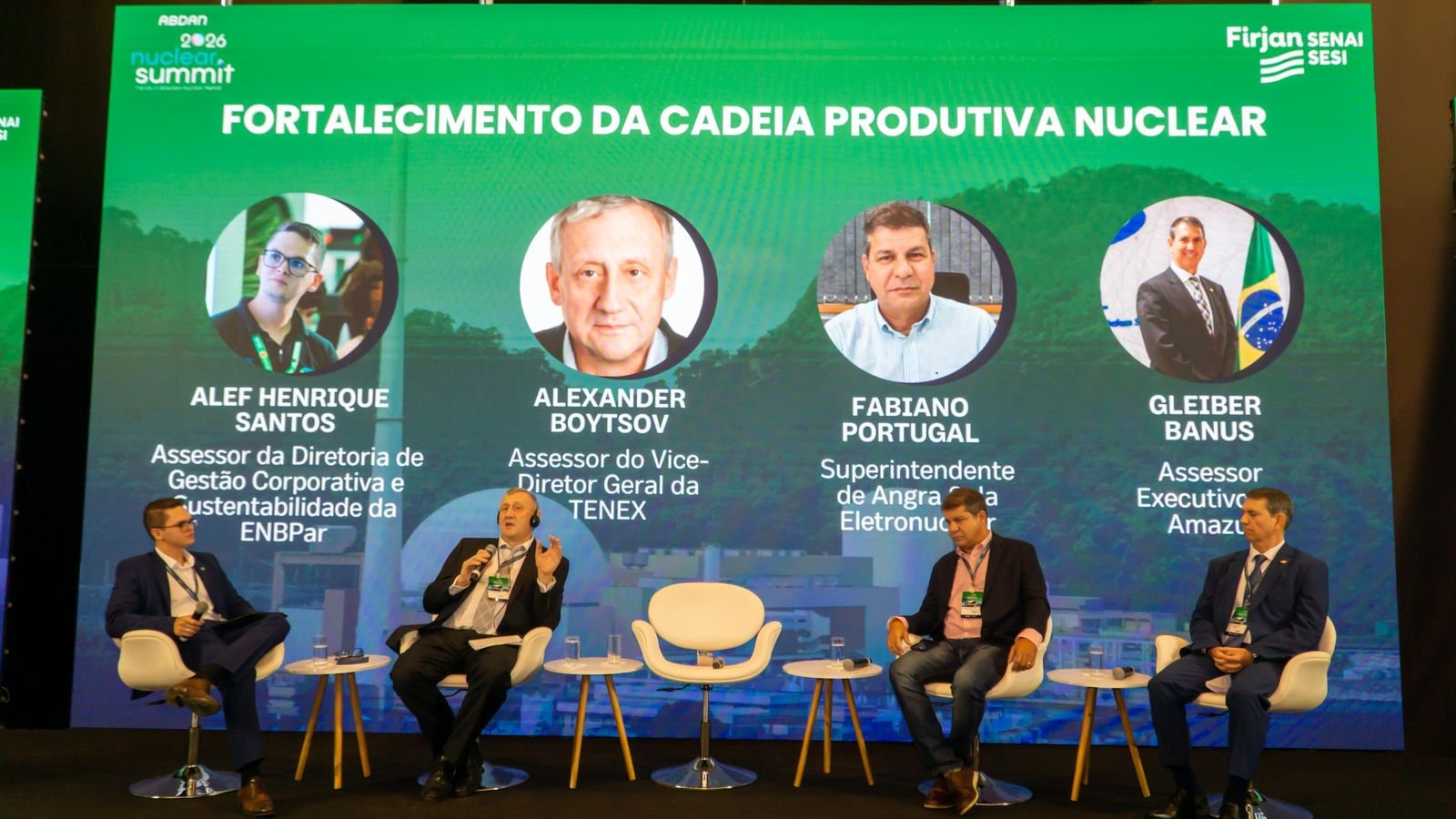
Interview with Alexander Boytsov in the Petrol News, 24/03/26
In the context of the growing interest into the development of nuclear energy, and to its own resources, the global market for uranium, it enters a new phase. According to projections by the World Nuclear Association, to the year 2040, the global demand for uranium, it should more than double, from the current 67 thousand to 150 thousand tons per year. At the same time as the beginning of the next decade, there may be a mismatch between the demand for and the production volume. in This scenario, they gain more and more importance to the technologies that allow you to bring new capacity into operation faster and more efficient, in particular in the run-in-situ (ISL), which has now become the method is dominant in the world’s supply of uranium. learn About how the market is changing and what opportunities it opens up for a country with a large number of features, such as the one in Brazil, we speak with Alexander Boytsov, advisor to the first deputy general director of Tenex, a company in the group is state-owned Russian Rosatom, who took part in today’s (24th) in the event of a Nuclear Summit, 2026, in Rio de Janeiro.
What are the top trends and technologies that determine the development of the mining of uranium in the world?
The main trend is the rapid increase in the demand for uranium is driven by the ambitious plans for the expansion of nuclear power. Over the next 15 years, the global demand for this resource, strategic, more than double that. At the same time, as early as the late 2020s, it may exceed the supply is ensured by mining projects in operation, under construction and in the planning phase. According to estimates by the World Nuclear Association, the deficit could be as much as 75 billion tons per year by 2040, a level that is comparable to that of the production in the world today.
But it’s also important to understand that the problem is not scarcity, such as uranium. On the basis of a global resource that is estimated to be around $ 8 million tons and, in theory, it is sufficient for a number of decades. However, the amount of the reserves of low-cost, which can be used to quickly and cost-effectively, it is slowing down. According to projections up to the year 2040, a significant part of these capabilities is almost out of power. As a result, the industry will depend upon more and more deposits, which are more costly, complex, and less and less happy. It is for this reason that we say that the age of the “uranium cheap” is coming to an end.
In the face of constraints on the basis of the mineral in natural uranium, in some countries such as Russia, China, and India, which are being considered in the development of the technology of reactors and fast, with the nuclear fuel cycle closes, it also allows you to reduce the demand for uranium, the natural park of the reactor exists, overwriting the natural uranium means.
In the industry of uranium goes through a restructuring, technological, and economic, and it is accompanied by an increase in the amount of the investment. Over the last fifteen years or so, the global market for uranium has gone through a period of falling prices, which led to a strike the following areas of the mine, with a total capacity of about 20 million tons, while the investments in geological exploration fell by almost 80%. Today, the industry is facing a cycle of an investment over: from the discovery of the deposit to start the production, usually it takes at least 10 to 15 years of age. This increases the relevance of the technologies that can be used to accelerate the implementation of projects to reduce your capital investment.
It is against this backdrop that the leaching or in situ (ESL) gained prominence. In 2005, it accounted for around 20% of global production now exceeds 55%, and in some countries, especially in Kazakhstan, this share is even higher. The changes are not just quantitative. It changes the model of the industry. The ISL trunking allows you to work with the deposit of the lower fat content, reduced capital investment, shorten the time limits for the operation and significantly reduces the impact on the environment. In a context of limited access to resources, low cost, and the ever-increasing demands in terms of sustainability and efficiency, this technology has firmly established itself as a new standard in the industry.
What is the principle of the technology of leaching or in situ? Under which condition (often referred to it, is it really effective?
The essence of this method is that the uranium is extracted from the no-till in the open air, and without the underground, by means of physical-chemical processes are controlled directly in the ground. The rock is brought to the surface by means of a system of injection wells and the production of a reagent is introduced into the horizon, production, usually a dilute solution of sulfuric acid with a concentration of about 0.5% to 1%. This is the solution travels through the rock that is permeable, it interacts with the minerals of uranium and turns it into a soluble form. Then, the solution of which is enriched in is then pumped to the surface, where the uranium is extracted by means of a process hidrometalúrgicos, such as ion exchange. After that, the solution is purified, it returns to the reservoir, the loop is closed, and if it repeats multiple times.
The process requires strict control. The entire system operates in a circuit, the hydrogeological strictly controlled, the pressure and the composition of the solutions and the movement of ground water is monitored continuously. Around the area, it is built on a network of wells and monitoring, which allows you to monitor in real time the state of the water. Because of this, the SUCCESSION is now considered to be one of the lowest environmental impacts for the production of uranium: there is no removal of the waste rock or piles of waste, or tailings dams waste, and the impact of the surface area is minimum.
However, the SUCCESSION is not to be used in any place. It requires in terms of geological and hydrogeological specific water permeability, the presence of a layer of the natural confinement and type of mineralization is mainly in deposits of the type, rolling it to the front (“infiltration”). Where these conditions are present, the technology and demonstrates a high efficiency. Already, in the deposits of hard rock with low permeability or without insulation, natural, suitable for the traditional methods of mining continue to be the most appropriate.
Brazil has significant reserves of uranium, but many of the deposits have not yet been developed in the industry. On the run in the wild you can change the economics of these projects?
Potentially, yes. One of the main benefits of the ISL, is that this technology allows you to enable the development of the deposits of which-with the traditional methods, you would be considered to be too complex, or is economically non-viable. This includes, for example, in fields with a low-grade uranium, a high degree of saturation or water conditions in the geological and mining the most challenging.
The business model here is different: it is not necessary for the operations for the removal of the waste rock or piles of debris, or dams and infrastructure, a logistics complex. The main investments are concentrated in the penetration of the fabric of wells, and the creation of a plant-technology-compact design. As a result, the cost of capital is significantly lower, and the time limits for the implementation of the project, the more short-term basis. This is especially relevant in the current scenario of the market, on which the window of opportunity is defined not only by the availability of resources, but also because of the speed with which they enter into the production, as we have already mentioned, a lack of supply may appear as early as the end of the decade.
In a context in which the participation of the reserves of low-cost, are declining globally, and technologies, such as the SUCCESSION become all the more important, as it allowed us to work with more complex features and a lower level. For the united states, where a significant portion of the uranium deposits have not yet reached the stage of industrial development, it provides the possibility to re-evaluate the project portfolio in light of the growth in global prices and demand. Of course, it all depends on the geological conditions but, in general, the SUCCESSION extends to the whole of the deposits, which may be considered to be economically viable.
The Rosatom has accumulated experience on the application of this technology, including in the Russian federation and the Kazakhstan republic. What are the lessons and the technological solutions that have been developed over the course of the year?
The ISL is a technology that requires high discipline and control to be accurate. It involves a rigorous work in the field of geology, hydrogeology, chemistry, mathematics, and management of the digital world. For this reason, in the assets of the mining of the uranium, we are using the digital platform “Mini Smart”, which allows you to monitor the movement of the solution, the pressure in the system and to prevent it from being output to the limits of the horizon, and productive.
The second important conclusion is that the environmental monitoring, and should not be treated as an additional feature, but as an integral part of the design. For this reason, it is built on a network of wells, as well as monitoring of the surrounding area, and the parameters of the ground water are monitored on an ongoing basis.
With the experience and scale that is relevant to you. Over the past 15 years, the production of uranium in the operations of the Rosatom has more than doubled, and by 2024, peaked at 8.6 million tons. At the same time, the share of the uranium produced by the ISL has increased from 17% to 88%. In practical terms, it represents a transition is nearly complete, to the other hand the technology.
In addition, this growth has occurred in the context of a volatile market, and for a long period of low prices, when the industry as a whole, reducing investment. This demonstrates that the SUCCESSION proved to be feasible from the perspective of technology and economics. The projects that have remained profitable, even in unfavourable market conditions. On the whole, this is the primary indicator of the maturity of the technology, and its ability to scale to ensure stable production and to adapt to changes in the market.
Latin America can be, in the future, they will become a new pole of global production of uranium?
The potential for this is, without a doubt, there is. The region has the resources, relevant, and, above all, the opportunity to work in the industry are already based on the models of modern, without having to follow the traditional paths of the past. To do this, you must have three elements: exploration geology in a consistent system with clear and technologies that can be reconciled with the industrial development, with responsibility for the environment.
If these conditions are not met, then the region can become a new and important part of the growth of the industry. And in Brazil, given the scale of the resource base, and the interest in the development of nuclear power, it has the full potential to play an important role in this process.
Source: Petro-News