
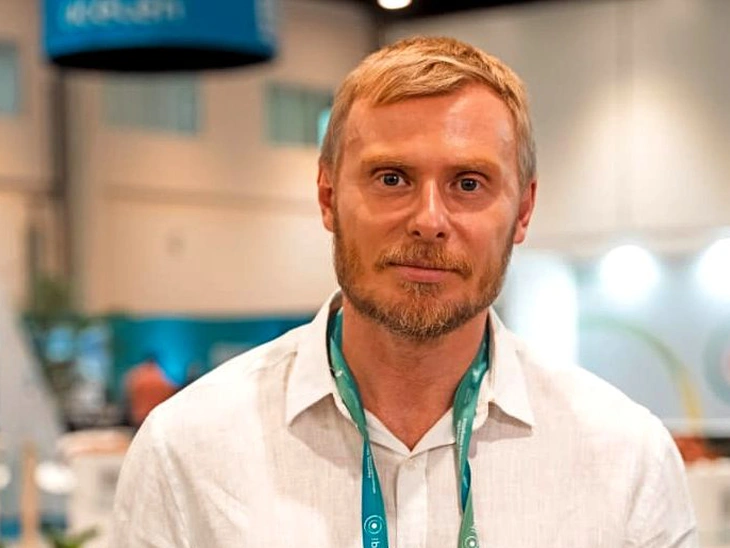
Interview with Ivan Dybov TN-Oil, 07/04/26
in The presence of the Rosatom in Brazil, it has gained more and more importance in a strategic point for the energy industry. In the midst of the challenges of the energy transition and the search for the sources of a stable, low-carbon, nuclear power is back in the center of the global forums, and in Brazil, with its head office in diverse and the potential for expansion, and takes a leading position in this scenario.
A world leader in nuclear technology, with operations in more than 50 countries worldwide and a strong presence in the international project, the Rosatom took part in the International Brazil’s Energy Meeting, 2026, held in the city. The event brought together the leading names in the industry, the energy to argue, integrated solutions that range from renewable energy sources up to the technological innovation and energy security.
To further this discussion, the TN of Oil and interviewed Ivan Dybov at the front of the strategies of the company in the region, acting as the liaison for partnerships, and the expansion of the business and the position of the institutional Rosatom in Latin american markets, keeping up with the opportunities in other countries, such as Brazil, which stands out as one of the main focuses of the company on the african continent.
Check out the interview!
TN Exploration of The Rosatom is one of the top global leaders in nuclear energy. As the company sees as the role of Brazil in its international strategy?
Ivan Dybov – Brazil is a strategic partner of the Rosatom in Latin America. It is precisely here, in Rio de Janeiro, from 2015 to work on the the sole regional center of business in the whole of the continent, which is reflected in the priority given to the country in our international strategy.”
Today, Rosatom is one of the few global players which are able to provide integrated solutions along the entire life cycle of nuclear power. This includes the development of a complete project of a nuclear power plant: from the field of the design and construction of the generating units to the supply of nuclear fuel, operation and maintenance, management of spent nuclear fuel used, and the decommissioning of the facility. In this integrated model, it guarantees a more consistent environment project and contribute to the sustainable development of the sector.
For a country that believes in not only your current needs, but also on the energy security in the long term, this type of approach is particularly relevant to the reliability of the supply, the integration of the different phases of the cycle, and the ability to plan for development for decades and have become the key factors. Because of this, we see that, in Brazil, a country that has the potential to bring together a wide range of joint projects in the nuclear fuel cycle for power generation, in the applications of non-energy technologies in the nuclear and in the training of specialists.
With the participation of Rosatom in the IBEM 2026 in the city of Salvador, reinforces this concern. This in turn led to the company being present at the event and what are your expectations for the brazilian market?
The savior, in a broader sense, the state of Bahia, a region historically been linked to the development of the resource base of the nuclear power industry in Brazil. Here is one of the major uranium deposits in the country, the Lagoa Real (Caetité). The achievement of an industry forum, precisely in the region and creates a natural opportunity to discuss one of the most fundamental elements of the entire supply chain of the nuclear — mineral resources. It was the subject that I have spent a large part of my presentation at the IBEM: the state of the global market for uranium, and the most modern technologies in the mining sector.
According to estimates by the World Nuclear Association World Nuclear Association, to the year 2040, the global demand for uranium, it can more than double the nearly 67-thousand to about 150 thousand tons per year. In this context, the countries which are the basis of its own resources, will have further opportunities to develop the sector and to strengthen its position in the nuclear power industry.
In this case, Rosatom can provide technological solutions to the concrete, in particular, the method of leaching and in situ (ESL). Now, this is the primary method used for the mining of uranium in the world, and, in the case of the Rosatom in their participation in the total production amounted to about 88% in the last 15 years. The technology is based on the injection of a specific solution in the tank by means of wells, allowing for the extraction of uranium, without the need for mining and the conventional method, such as open-cast mines, or underground. Among its main advantages include lower capital investment, shorter time-frame for the beginning of the production, and the environmental impact is significantly reduced: there is no formation of piles of debris, the area of the surface is smallest, and the entire process is carried out under the monitoring of the environmental continuum. For this reason, this technology is nowadays considered to be one of the most promising for the development of uranium mining in the country with the geological conditions, including appropriate in Brazil.
Which is now the main fronts of the activities or interests of Rosatom in the united states?
Today, the cooperation between Rosatom and Brazil it is primarily concentrated in the nuclear fuel cycle. The company operates 100% of the needs of the nuclear power plant of Angra do heroísmo on highly enriched uranium, and also develop co-operation in the process of conversion and enrichment of uranium in brazil.
At the same time, we see that, in Brazil, a country with tremendous potential for the development of the generation of nuclear power stations. The Rosatom has leading positions globally in the construction of a nuclear power plant on the outside of the international portfolio of the company includes 41 of generating units in 11 countries, and at different stages of implementation.
One of the distinctive features of the approach taken by the Rosatom is that it does not work with a single model for all of you. We address the specific needs of each country, its balance sheet in the energy, industrial, regulatory, and long-term goals. For this reason, we are not speaking of a product is isolated, but rather a set of solutions that can be tailored to suit the needs of Brazil.
Small modular reactors (SMRs) have been gaining prominence in the global arena. There is a possibility of the application of this technology in the philippines. At what stage are these arguments?
Small modular reactors are one of the most dynamic sectors in nuclear energy today, and it’s Rosatom already has the practical experience on the task at hand. In Russia, it is, in the operation of a nuclear power station-floating Akademik Lomonosov, is in Pevek, which provides power to a remote region, and demonstrates the potential of these solutions for the areas of infrastructure, limited.
These technologies, which are relevant not only to isolated areas, but also to the new requirements — for example, the power supply to the industrial clusters, and data centers, where it is essential for a supply of stable and low-carbon.
In addition, recently it has been signed and the first export contract for the construction of a nuclear power plant to a small size in the Uzbekistan. It is not just the implementation of a specific technology, but rather a model that is flexible. At the same location, it is referred to the combination of units of large and small power, in accordance with the needs and characteristics of the energy system of the country.
If you talk about Brazil, is the potential for the application of these solutions, there’s bound to be. However, this is a subject that requires a professional discourse of in-depth, taking into account the specific features of the energy sector, the regulatory environment, and the strategy for the long-term development of the sector.
How is nuclear energy can contribute to the energy transition in the brazilian, especially considering the strong presence of renewable energy sources in the array in the country?
Nuclear power does not compete with renewable energy sources — it complements it. It is well-known at a global level: nuclear power is increasingly being recognised as an essential part of a matrix of low-carbon, and it has been included in several different taxonomies of “green”.
For Brazil, these are especially relevant to you. The generation of solar and wind power has been growing rapidly, but the electrical system is also in need of the sources of stable despacháveis, low-carbon, and that it does not depend on the weather conditions or time of day. It is precisely this role that nuclear energy can play in ensuring a new generation of reliable, improve the stability of the system is to reduce emissions, without limitation, the advancement of renewable energy.
Because of this, in line with the energy transition, it is not a matter of competition between the different sources and is a combination of a well-balanced between them.
A Rosatom company also operates in areas such as medicine, nuclear energy, innovation, and technical training. There are initiatives and / or projects that are in progress or under negotiation in Brazil, on these fronts?
Yes, in these areas, there is already cooperation, in addition to a solid foundation for expansion. In nuclear medicine, the Rosatom has provided radio canada, Brazil, covering a significant portion of the country’s demand for these raw materials. These products are used in the diagnosis and treatment especially in oncology, cardiology, and other areas of high social impact, and, on a global scale, and the production of Rosatom allows you to make the most of the 2.5 million transactions per year.
With regard to the training of specialists and working with young people, this calendar is also present in Brazil. Rio de Janeiro, host of the Latin American Forum of the Youth of Nuclear energy, with the participation of students, young professionals, and brazilian, and in the year 2025, the representatives of the Rosatom took part in the BRICS Youth Energy Summit in the country, where they discussed, among other things, low-carbon technologies, and small modular reactors (SMRs).
In addition to this, the company has developed international education programs are geared to students, and young talent, and is also open in Brazil, such as the project “Ice-breaker in the Know. There was also a victory for the brazilian team TupiTech in the world HackAtom of the Rosatom — a significant achievement that demonstrates a high level of education, and in the best interest of the young specialists of the brazilian central area.
Brazil has a long tradition in the sector of nuclear energy, but it still faces regulatory challenges, and to expansion and growth. How to Rosatom, assesses the brazilian institutional environment for new investments?
Brazil has a sectoral basis, the solid, and clearly a growing interest in the development of nuclear energy. We have observed that there are positive signs, such as the strengthening of the regulatory system, the State of development of the entire value chain — from uranium mining to power generation and the inclusion of nuclear power in the strategy for the energy transition.
At the same time, the implementation of new projects, one key factor that continues to be a predictable and transparent regulatory environment, including with respect to licensing, with the participation of private investment in the construction of a normative basis for the long-term. The establishment of a clear and stable in these areas will allow you to reduce the risks and to make large projects more manageable.
What are the next steps of Rosatom in the united states? There are prospects for more, partner with or have new projects in the short and medium term?
Yes, as a practical next step, we outline the agreement was signed just a few days ago during the Nuclear Summit, 2026: the Uranium One Group, which is part of Rosatom, and the brazilian NBEPar agreed to create a joint venture, named Nadina Minerals.
The aim of the company is to develop new projects in Brazil, in the area of minerals, critical and policy, including the license to carry out activities of exploration, survey, and, later, in the implementation of the capacity-state-of-the-production-and-processing.
This is an important step in the transition to a discussion of the potential for the practical implementation of the cooperation and the formation of the long-term prospects in the country.
That is the message of the Rosatom leaves it up to the public in the IBEM to 2026, and the actors of the energy sector in brazil?
“Our main message is that of the Rosatom is also open to cooperation for the long-term and results-oriented, practical, and serving as a trusted partner, offering competitive solutions, and built-in.
We already have a tradition of co-operation with Brazil, since the supply of fuel to the power plants from the Creek to the projects in the field of nuclear medicine. At the same time, the Rosatom operates in more than 50 countries and is a global leader in the construction of a nuclear power plant on the outside, which gives us a wide-ranging international experience in the implementation of complex infrastructure projects.
We are now ready to use that experience to, and in conjunction with partners, to brazilian, to look for solutions that meet the needs of the country — it is in the development of the power generation, nuclear fuel cycle, from new technologies and the training of staff and specialists. What is more important is the dialogue and the implementation of the projects that have real-world results.
Source: TN-Oil