
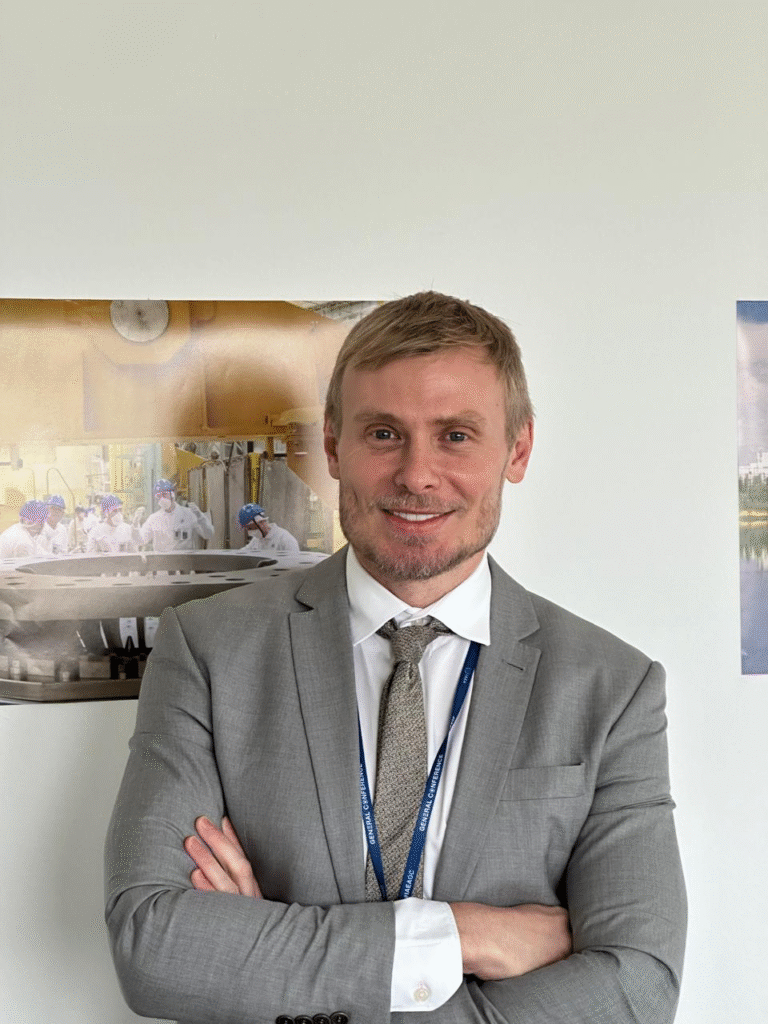
Interview with Ivan Dybov to the site for Agroforestry in the state of Bahia, 24/04/26
In an exclusive interview to your site, the Agri in the state of Bahia, Ivan Dybov, the director of the Rosatom in Latin America, has said that it is a sleeping giant in the industry of the nuclear world, paying special attention to the potential for the expansion of nuclear power. The executive pointed to the strategic work of the Russian state, and the potential of the nation, yellow-green, in the area, especially when it comes to industrial (mining and metallurgy).
Dybov, he participated in the iBEM to 2026, and The International Meeting on Brazil’s Energy Market / International conference on the global Energy Market in Brazil), which was held in march of this year, at the Convention Centre in Salvador, state of Bahia.
, During the event, which is one of the leading platforms for a discussion on the energy transition in Latin America, the managing director of the giant for the Russian multi-sectoral, and a world leader in the technology of nuclear, based in Moscow, has argued that nuclear power must be part of a comprehensive system integrating the development, life cycle of the fuel, and the development of the technology.
In an exclusive interview for Agroforestry in the state of Bahia, Dybov, stressed the interest of the Rosatom in bringing the technology for small modular reactors (SMRs) in Brazil, and especially for applications in isolated locations, such as the Amazon, or programs that are tied to the iron ore and metallurgical industries.
He also stressed the importance of local partnerships. The director of the Rosatom has ensured the strengthening of the act in co-operation with Brazil, in the nuclear fuel cycle, including uranium conversion, brazilian, and nuclear medicine.
The conversation is established with the site, the Agri in the state of Bahia, Dybov explained in more detail what has been described by the Rosatom in iBEM to 2026, an event that is focused on the market for a hybrid power for connecting renewable energy sources and non-low-carbon-based fuels. Check out the interview below, in the shape of a ping pong:
the Site Agroforestry in the state of Bahia – Why is it so important for Rosatom to participate fairly in the iBEM at Him.
Ivan Dybov – The iBEM-is a platform in which energy is discussed in a comprehensive way, and it is precisely because of this that it is very important to us. Today, Rosatom is one of the few players in the market of nuclear to the global is able to offer partners a comprehensive solution for the entire life cycle of nuclear power. This is a support for the design of a nuclear power plant, the design and construction of the generating units to the supply of nuclear fuel, service and maintenance, or management of spent nuclear fuel and the subsequent decommissioning of these facilities.
For Brazil, a country that already has nuclear power plants in operation, and it’s not just a question of supply, but of the strategic sustainability of the entire nuclear infrastructure in the coming years. The reliability of the delivery, and the integration of technology in all stages, and the predictability of co-operation over the years have become some of the major factors in selecting a partner.
At the same time, the Rosatom is working in a manner consistent with its partners in the development of the mineral resources. We believe that the future of nuclear energy, is not possible without a responsible position in relation to the resources. To the extent that the demand for uranium, grow, gain weight, not only does the mining industry in and of itself, but also with new technologies that enable the use of the spent nuclear fuel in a more efficient way to increase the safety and security of the supply chain and, in the future, to move forward at the end of the nuclear fuel cycle.
The Site Agroforestry in the state of Bahia – Speaking specifically to the nuclear fuel cycle, which Rosatom is already done today in the united states?
Ivan Dybov , Brazil is a country that is on the agenda, nuclear energy, there is a lot of time, it is not only limited to the operation of the two existing units in operation. There is a base of our own resources, the industry is strong and growing interest in new energy solutions, and a discussion of the increasingly dense, the role of the country in the nuclear fuel cycle. This is especially clear in the state of Bahia, for the sake of the region, Caetité, where it has historically focused on the primary database, active in the mining of uranium in the country.
The Rosatom has already been in Brazil for several years now. Our regional center in Rio de Janeiro, was inaugurated in the year 2015. One of the central building blocks of co-operation is exactly the nuclear fuel cycle. Today, the Rosatom provides a highly enriched uranium for power plant in the city, and the force contract covers 100 per cent of the demand of the plant.
In addition to this, you will proceed with the co-operation in the conversion and enrichment of uranium, a brazilian, that is, on the steps of connecting to the extraction of the raw material for the production of nuclear fuel ran out. For Brazil, it is not only the recruitment of a service alone, but to the strengthening of the chain of the fuel. The country now have access to the technological capacity to global, in one of the most sensitive of the cycle, and, at the same time, it strengthens the foundation for the further development of their own nuclear infrastructure.
The Site Agroforestry in the state of Bahia – In a broader sense, in addition to the current contract, which are the frontline of the co-operation of the Rosatom considers to be the most promising in the united states?
Ivan Dybov – Our approach is to offer a product is isolated, but the solutions for the entire life cycle of nuclear power. This may include the generation and supply of fuel, and service areas related to the sustainability of the industry.
In the field of development, Rosatom, today it is a world leader in a number of international projects of nuclear power plants. The international portfolio of the company includes 41 of generating units in 11 countries, and at different stages of implementation.
We work with both large power plants as well as modular solutions for small-scale to choose the most suitable format for your every need. A good example of this approach is to Uzbekistan, where Rosatom is building the first platform of its kind to combine both the reactors and the low power. This is clearly, our principle is: do not provide a single template for all of it, but to ride with a set of real-world needs of the client.
To Brazil, it may be relevant in different fields, ranging from hard drives to the electrical system, even in small solutions to the territory, remote, industrial, and mining industries, as well as the new digital economy, including data centers, which are of particular importance for the stability, and the price is predictable, the power, and the proximity to the source of generation.
Another very important thing is the management of spent nuclear fuel and radioactive waste. This is precisely the topic, which often appears as the main argument against the development of nuclear energy. For us, however, it is essential to make it clear that this is not a problem without a solution, but in an area where there are already solutions that are technologically mature. The Rosatom has with a full set of skills to the secure storage and transportation of the re-work and re-insertion of the valuable materials in the fuel cycle. That is, it’s not just to isolate the waste, but in a more rational and responsible use of resources. Because of this, a theme that is often seen as a weakness of nuclear power, in practice, it becomes a proof of the maturity of technology.
The Site Agroforestry in the state of Bahia – In his speech at the iBEM, the lord addresses the issue of uranium mining. For this discussion, it became especially now, and why it is important just to Brazil, and for the state of Bahia?
Ivan Dybov – Because of the global market for uranium, it really is entering a new phase. According to the survey-based World Nuclear Association, to the year 2040, the demand for uranium should be more than doubled, from an average of 67 thousand to 150 thousand tons per year. As early as the end of the decade, the demand may start to outperform in the provision, and the difference can reach up to tens of thousands of pounds. This turns into the question of the supply of raw materials at a strategic issue for the whole of the nuclear industry.
At the same time, it is not a matter of lack of resources, in and of itself. On the basis of the overall resources of uranium are estimated to be around eight million metric tons and, in general, it is sufficient for a number of decades. The problem in a different way. The involvement of the reserves of low-cost and easy-to-extraction has been decreasing steadily. The industry is forced to move to projects that are more complex, and more expensive, and it takes time. With the discovery of the mines at the beginning of the industrial production normally take 10 to 15 years of age. After the Fukushima accident, the market has experienced a long period of low investment in exploration, fell, and around 15 mines, with a total capacity of about 20 tons, they were stunned. Right now, the industry is pretty much running at the back of this demand is trapped.
Under these conditions, the countries on the basis of their own resources, they gain strategic importance as a supplement. Brazil, in particular, in the state of Bahia, it is important because there is a base of the weapon, consolidated in the region of Lagoa Real in Caetité. With the growth in global demand, it is not only for the extraction of the raw materials, but also a more active involvement in the nuclear fuel cycle, and the architecture of global power. For this reason, in the discussion of modern approaches to uranium mining in the state of Bahia is now directly linked to the economic outlook and industry in the region.
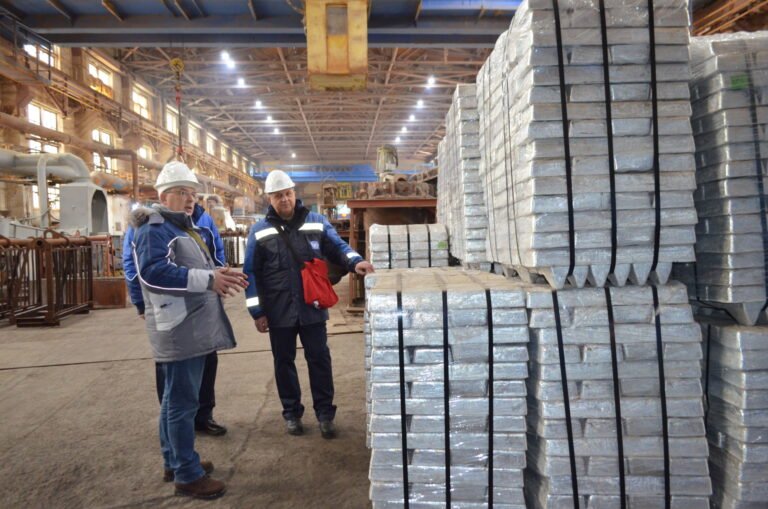
The Site Agroforestry in the state of Bahia – and If we speak of the modern approaches to the mining of uranium, which may be of relevance to the clinic, and one of them is to run underground through a well. What is it and why is it arouses so much interest? It is possible to talk about the prospects for the Country?
Ivan Dybov – The interest in this technology, and that is understandable. It enables you to extract the uranium, with no open pit mines or underground mines, that is, without needing to remove the rock to the surface. At the time of the excavation, and transport of large volumes of iron ore, piles of tailings and tailings from the tailings, and applies a model of a system of wells, and the controlled circulation of the solution on the horizon of production.
Technology, in and of itself is not a new one. The first industrial sites have appeared yet in the decade of the 1960’s and 1970’s in the soviet union, and the United States, and in the last few decades, it has become the primary method used for the extraction of uranium in the world. Today, more than half of the uranium will be produced by this method.
In practice, they are cross-drilled wells in the injection and production in a geological formation. For some of them, it is injected to the solution of lixiviante, it becomes uranium in soluble form. For others, the solution of production is brought to the surface, where the uranium is extracted, and the solution, after it cleared up, it returns to the loop. The whole process takes place on a closed-circuit, and under permanent control.
The technology requires a certain geological conditions, such as reservoirs, sandy and porous, saturated with ground water, and, which is particularly important in the isolation of the natural horizon of production for waterproof layers above and below it. The principle is simple: it is the first in the field, and then the technology.
When the conditions are right, the benefits become obvious. From an economic point of view, on the run, underground, reduces the capital investment and shorten the period of the coming into operation of the project, and makes for the infrastructure in a more compact design. From the point of view of the environment, reducing the impact area of the surface, and removes the deposits of the classics of the barren waste, and allows for constant monitoring of the state of the environment in the area. It was precisely because of the combination of these factors that has made the technique on one of the most in-demand in the mining and modern for him.
The Site Agroforestry in the state of Bahia – In terms of hands-on experience, the extent to which the technology of leaching out of the underground, by wells, is scalable, and what is the real history of the Rosatom in this area? There is a potential for the application of this experience in the united states?
Ivan Dybov – Here it is important to note that we are not talking about the theory, but is a technology in which the scalability has already been proven to work in practice. Over the past 15 years, the production of uranium at the edge of the Rosatom has more than doubled, from approximately 3.7 thousand tons to about 8.6 billion metric tons by 2024, and run the underground has played a central role in this progress.
If you look at the structure of the production, with the participation of the uranium, which is obtained by this method has increased 17 per cent to 88 per cent. That is, the technology has ceased to be a companion, and went on to be the basis for the production model. This applies, in particular, to Kazakhstan, where Rosatom and develops projects in partnership with Kazatomprom, and where is the leaching out of the underground and became, in practice, the standard of the industry.
This experiment shows that the technique not only allows for the development of ore deposits in an efficient way, but also to scale up production with the flexibility to put in new areas of operation in stages, and to respond quickly to the demands of the market. To the rest of Brazil and the state of Bahia, everything will depend on the geology in this area, but, on the hydrogeological conditions, adequate, on the run, underground, can improve significantly the economics of the project, reducing the barrier to entry, to speed up the production start-up and make it to the development of the deposits is more flexible.
The Site Agroforestry in the state of Bahia – The Rosatom you can take part in the implementation of technologies such as this to run underground in the united states?
Ivan Dybov – the potential is There for this kind of co-operation, and it’s starting to take shape in practice. Today, the Rosatom one of the largest global players in the industry to him. The company is among the top three teams of the world, on the basis of the features, and the volume of production, and, as I have already said, about 88 percent of the uranium that is extracted by leaching out of the underground, which is indicative of the expertise accumulated just in the technology.
A few days ago, we signed the agreement to create a joint venture with Nadina Minerals between the Uranium One Group, which is part of Rosatom, and the brazilian NBEPar, the group’s Diamond. The company’s mission is to develop projects in the field of minerals, critical and policy in the united states, including exploration, geologic time, and the later establishment of industrial enterprises in modern, with the use of advanced technologies.
The Site Agroforestry in the state of Bahia – We talk a lot about the technology and the market. But looking more widely, for the development of nuclear projects could provide in the region in terms of quality of life, job creation and new opportunities?
Ivan Dybov – I always like to include a simple formula: $ 1 invested in the project of the nuclear generates about $ 10 for the economy of the region and the industries associated with it. It is one of the multipliers of the highest in the industry. These projects will create jobs, generate the demand for the services of local suppliers, developing transport, energy, education, health care, and the services sector. In other words, it is a project that nuclear is not an object, isolated, but it is a hub of growth for the entire region.
At the same time, the effect of a technology in nuclear technology will only appear in major infrastructure projects. One of the clearest examples is the nuclear medicine. The Rosatom provides the Brazil’s medical isotopes, for long-term contracts, and that such products are used in the diagnosis and treatment of diseases, cancer, and cardiovascular disease. For the thousands of patients all over the country, including in regions, such as in the state of Bahia, this means the diagnosis and therapy is the most affordable and reliable.
Another important issue is the development of human capital. In the nuclear sector requires skilled engineers, operators, researchers, and faculty. For this reason, in and around these projects, it grows, inevitably, the demand for training, and cooperation with, the universities, and the preparation of local experts. In the end, it’s not only for the development of industry but to the formation of a learning environment and a professional, sustainable, and one that remains on the area for a long time.
The Site Agroforestry in the state of Bahia – in order to this, up to that point in the work with young people, and for the training of specialists is a priority for the Rosatom?
Ivan Dybov ” For us, this is indeed a top priority, and it’s Rosatom develops a system of the programs of international education and is aimed at the youth, to which the brazilian participants are already taking an active part. An example of this is the Global HackAtom, an international competition in which teams to solve real-life challenges of your industry in the next 24 hours. By 2025, it just is a Brazilian team, the TupiTech, which is formed by students of the Military Institute of Engineering, has won the overall final. It is a very eye-opener.
There is also a project aimed at a younger audience. The ice-Breaking the Knowledge-is a program for high school students, whose finalists will go on to an expedition to the North Pole on an ice-breaker nuclear power plant. In the last year, for the first time, was attended by a student in Brazil.
For college students, young professionals, and there are formats that are most developed, such as the forum in Russia, NEW schools, and the educational program and the Train-the-Trainers for the teacher. In addition to this, there are dues to the state to study in Russian universities, which provides an opportunity to get specialized training and hands-on experience.
For us, it is important that it is not a case of the initiatives are ad hoc, but in the formation of a professional community. And we can see that the interest in these programs, in Brazil, it grows in a stable manner, and that is a good thing, both for the industry and for future projects.